An expert ecological explanation from a Kenyan perspective
At first glance, this sounds counterintuitive. African Lion are larger, stronger, and socially dominant—so surely they need more space?
In reality, Cheetah require far more landscape per individual to survive.
The reason lies not in body size, but in ecological suppression, social structure, and survival strategy. This distinction is critical for understanding predator conservation in Kenya.
1. Dominance vs Avoidance: Two Opposite Survival Strategies
Lions: dominance-based coexistence
Lions are apex predators that:
- Defend fixed territories
- Exclude or kill competing carnivores
- Use strength and group size to control space
A single lion pride can compress competitors into smaller areas.
Cheetahs: avoidance-based survival
Cheetahs survive by:
- Avoiding lions and spotted hyenas
- Using visibility and distance rather than cover
- Abandoning kills and moving frequently
This means cheetahs must constantly range outward to find low-risk hunting and cub-rearing zones.
Key principle:
Lions hold space. Cheetahs must escape space.
2. Predator Suppression: The Hidden Cost of Living Near Lions
Cheetahs are not limited by prey. They are limited by other predators.
In ecosystems like the Masai Mara National Reserve, lion and hyena densities are extremely high. As a result:
- Lion and hyena encounters kill cheetah cubs
- Adult cheetahs lose 30–50% of kills
- Females abandon otherwise ideal habitat
This phenomenon—intraguild predation—forces cheetahs to use much larger areas than lions to achieve the same reproductive success.
3. Territory Size: The Numbers Tell the Story
| Species | Typical spatial use |
|---|---|
| Lion pride | ~50–200 km² (highly variable, defended) |
| Male cheetah coalition | ~100–400 km² |
| Female cheetah (with cubs) | 500–1,500+ km² |
Female cheetahs, especially those raising cubs, require vast, shifting home ranges to stay ahead of predator pressure.
This is why:
- Cheetahs disappear first from fenced reserves
- Lions persist longer in smaller protected areas
4. Social Structure Amplifies the Difference
Lions: safety in numbers
- Live in prides
- Defend cubs collectively
- Males provide deterrence
Cheetahs: solitary vulnerability
- Females raise cubs alone
- No defense against lions or hyenas
- Cub survival often below 30% in predator-rich areas
To compensate, cheetah mothers rely on space, secrecy, and movement—not force.
5. Habitat Quality vs Habitat Quantity
Lions thrive where:
- Prey density is high
- Territories are stable
- Human pressure is low
Cheetahs require:
- Open visibility (short grass)
- Low predator density, not just high prey
- Connectivity between safe zones
Ironically, the “best” lion habitats are often the worst places to raise cheetah cubs.
6. Kenya Case Study: Mara vs Laikipia
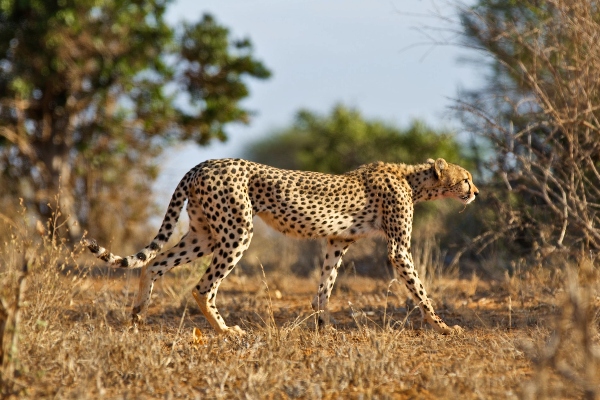
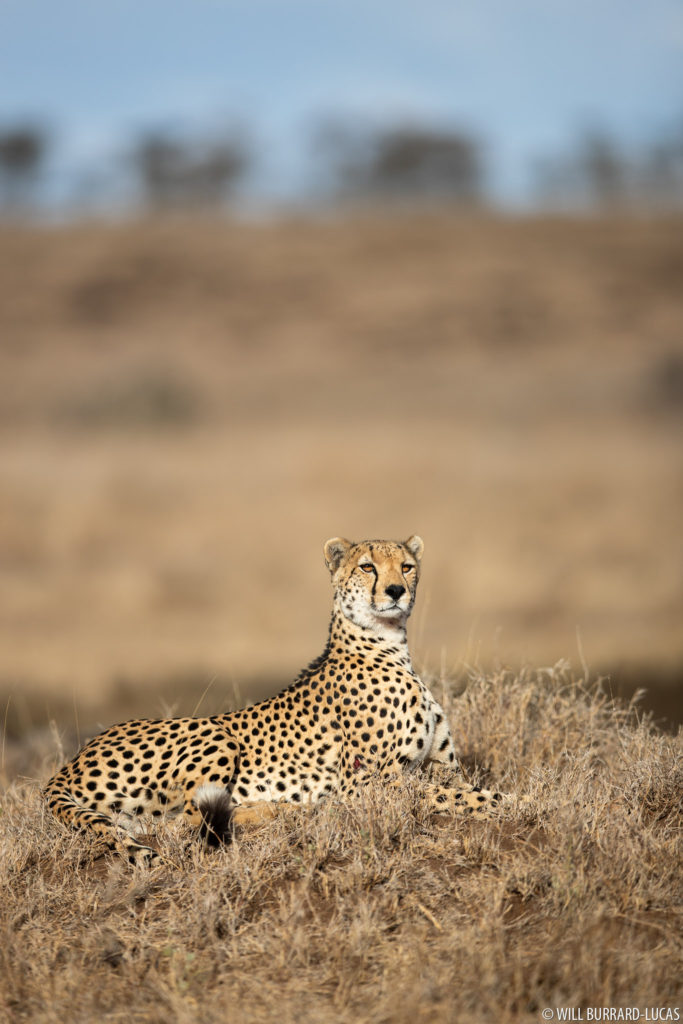

4
Masai Mara
- Extremely high lion and hyena density
- Excellent adult cheetah sightings
- Low cub survival
Laikipia Plateau
- Lower predator density
- Larger, connected conservancies
- Higher cheetah recruitment
Despite fewer sightings, Laikipia contributes more to long-term cheetah persistence.
This illustrates a critical conservation insight:
Visibility does not equal viability.
7. Fences, Fragmentation, and Why Cheetahs Lose First
Lions can tolerate:
- Smaller reserves
- Partial fencing
- High tourism pressure
Cheetahs cannot.
Fragmentation:
- Blocks escape routes
- Concentrates predators
- Increases cub mortality
This is why cheetahs are absent or declining in many fenced parks where lions remain common.
8. Human Landscapes: A Double-Edged Sword
Cheetahs often survive better outside national parks, in:
- Community conservancies
- Private ranches
- Low-density pastoral landscapes
Why?
- Fewer lions and hyenas
- More space to move
- Lower direct competition
But this also exposes cheetahs to:
- Livestock conflict
- Roads
- Habitat conversion
Effective cheetah conservation therefore depends on coexistence landscapes, not fortress parks.
9. The Conservation Implication (Why This Matters)
If conservation planning focuses only on:
- Park size
- Lion numbers
- Tourist sightings
…cheetahs will continue to decline.
Cheetahs require:
- Landscape-scale planning
- Predator-aware management
- Connectivity beyond park borders
Protecting cheetahs means protecting space itself.
10. The Expert Takeaway
Why do cheetahs need more space than lions?
Because:
- Lions dominate through strength
- Cheetahs survive through avoidance
- Avoidance requires room to move
Cheetahs are not weak—they are specialists.
And specialists always need more space than generalists.