A comprehensive, ecology-driven guide to hyenas in Kenya, covering species, behavior, conservation, and the best places to see them
Kenya is one of Africa’s most important countries for hyenas, supporting three distinct species that occupy very different ecological niches. Often misunderstood as mere scavengers, hyenas are in fact highly intelligent carnivores that play a central role in maintaining healthy ecosystems.
1. Hyena Species Found in Kenya (Taxonomy & Status)
Kenya hosts three of the four hyena species found globally, making it a hyena diversity hotspot.
- Spotted Hyena – Least Concern (LC)
- Striped Hyena – Near Threatened (NT)
- Aardwolf – Least Concern (LC)
Each species differs markedly in diet, social structure, habitat use, and visibility on safari.
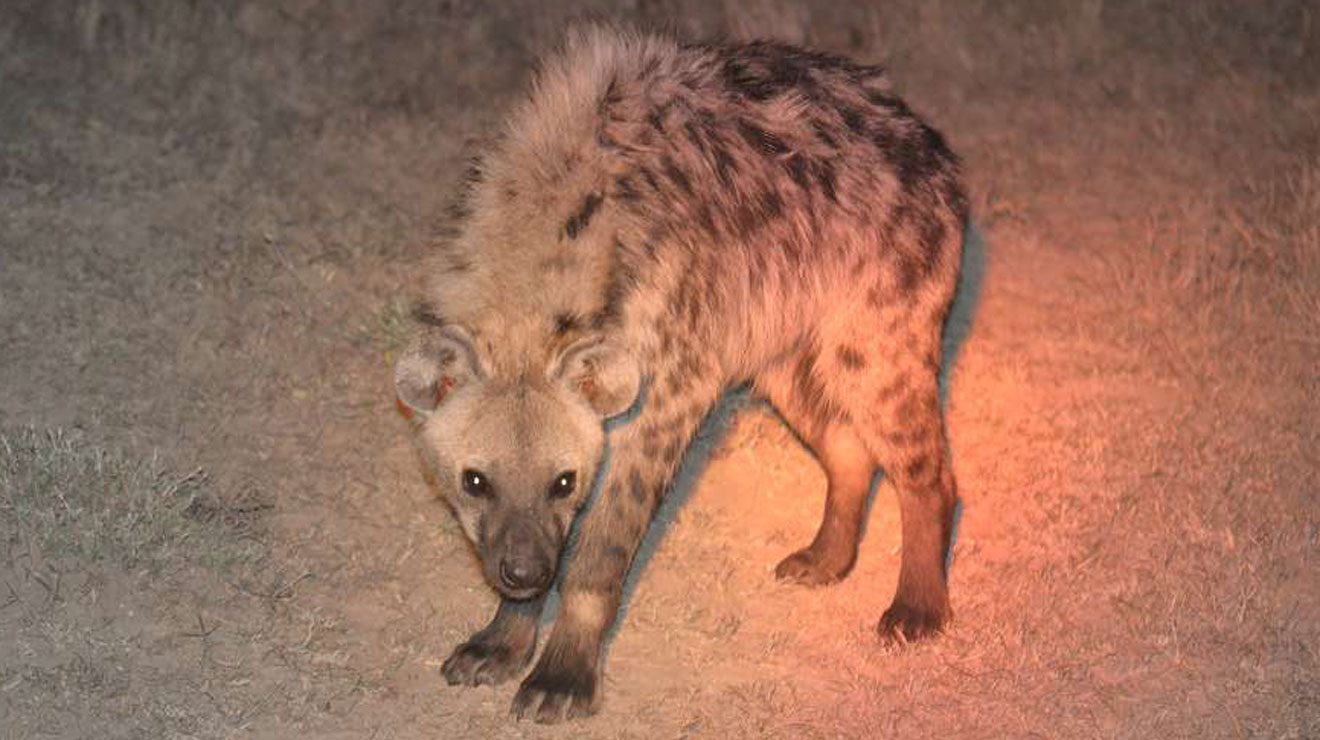
2. Spotted Hyena in Kenya (Crocuta crocuta)
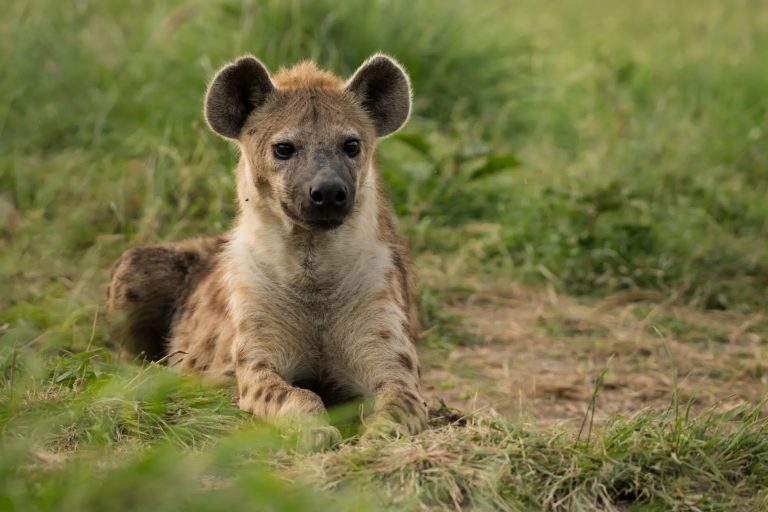
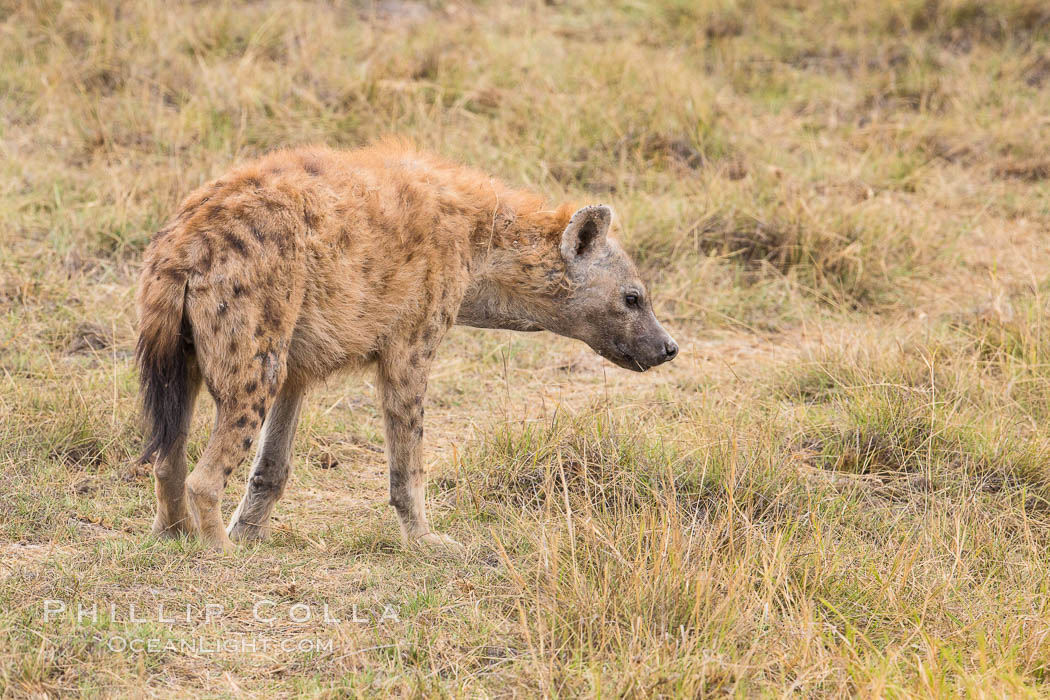
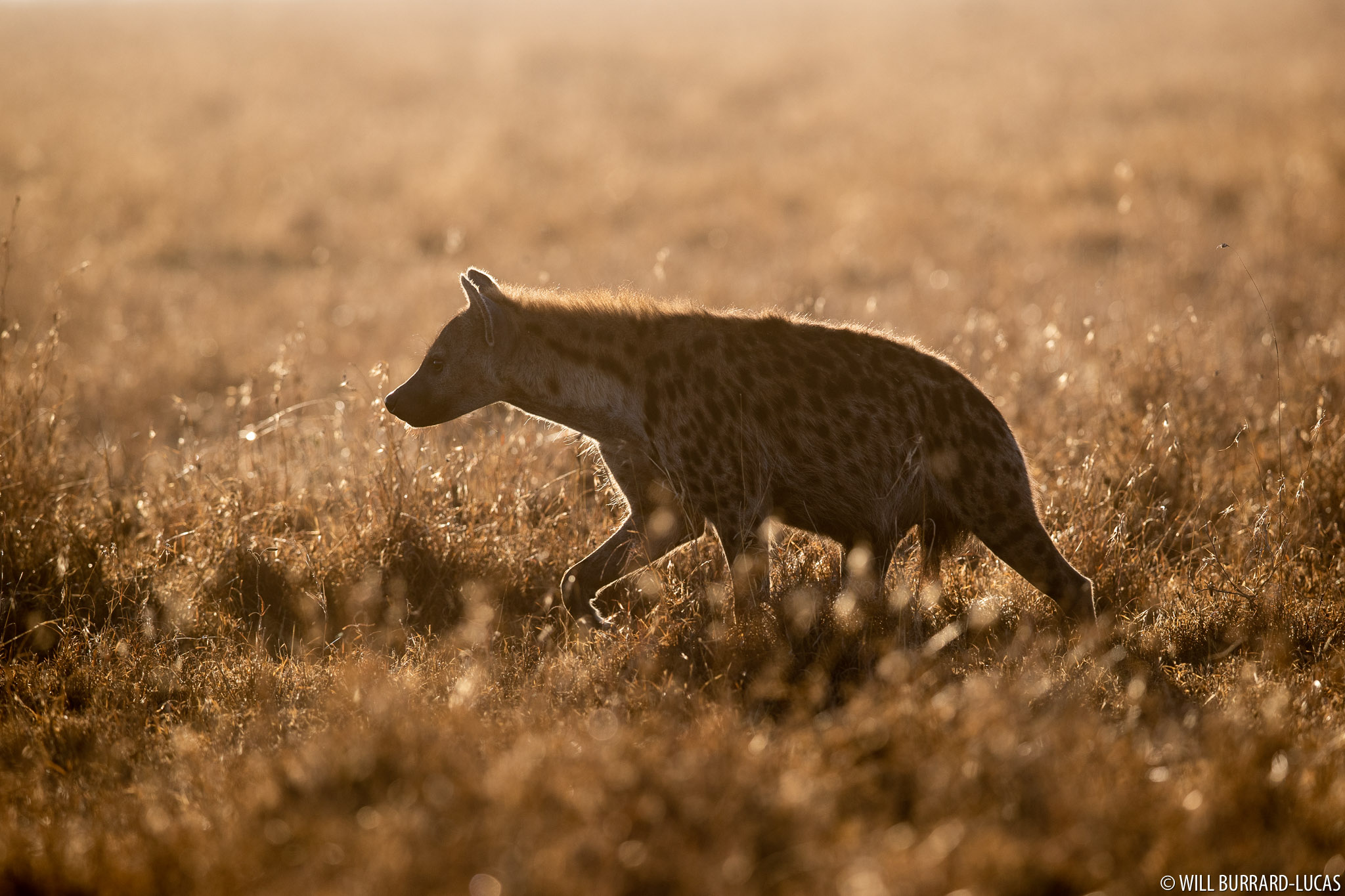
Ecology and behavior
The spotted hyena is Kenya’s most abundant large carnivore and the dominant predator in many ecosystems.
- Lives in large, matriarchal clans (often 40–80 individuals in the Mara)
- Highly intelligent; complex vocalizations and social hierarchies
- Skilled endurance hunters, not just scavengers
- Females are larger and socially dominant over males
In places like the Masai Mara, spotted hyenas outnumber lions and frequently displace them from kills.
Where to see spotted hyenas in Kenya
- Masai Mara National Reserve – Extremely common; visible day and night
- Amboseli National Park – Smaller clans adapted to open plains
- Tsavo East National Park & Tsavo West National Park – Widespread but more nocturnal
- Laikipia Plateau – Strong populations on private conservancies
- Nairobi National Park – Surprisingly common, especially after dark
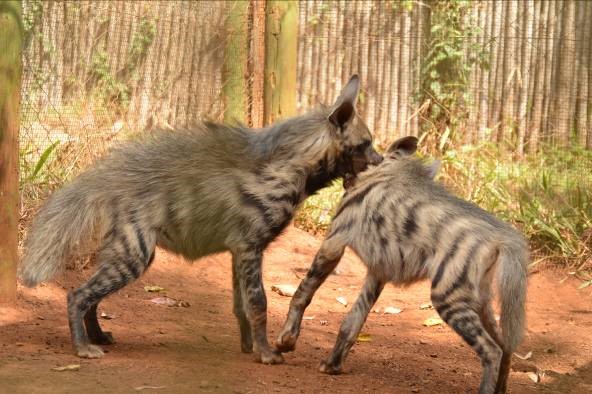
3. Striped Hyena in Kenya (Hyaena hyaena)

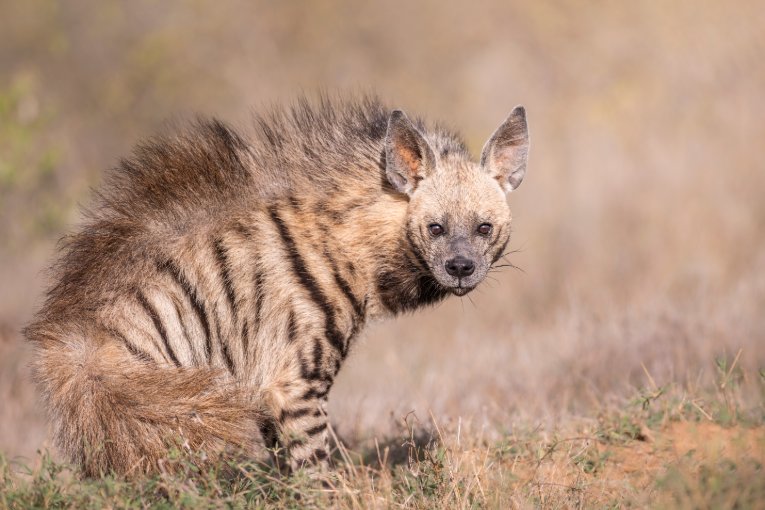
Ecology and behavior
The striped hyena is far rarer and more secretive than its spotted cousin.
- Mostly solitary or found in pairs
- Primarily nocturnal scavenger
- Prefers arid, rocky, and semi-desert habitats
- Avoids areas with high densities of spotted hyenas
Its Near Threatened status reflects persecution, poisoning, and habitat loss, especially outside protected areas.
Where to see striped hyenas in Kenya
- Samburu National Reserve – One of the best chances, especially at night
- Buffalo Springs National Reserve
- Shaba National Reserve
- Northern Kenya conservancies and arid rangelands
Sightings are uncommon and usually require night drives.
4. Aardwolf in Kenya (Proteles cristata)


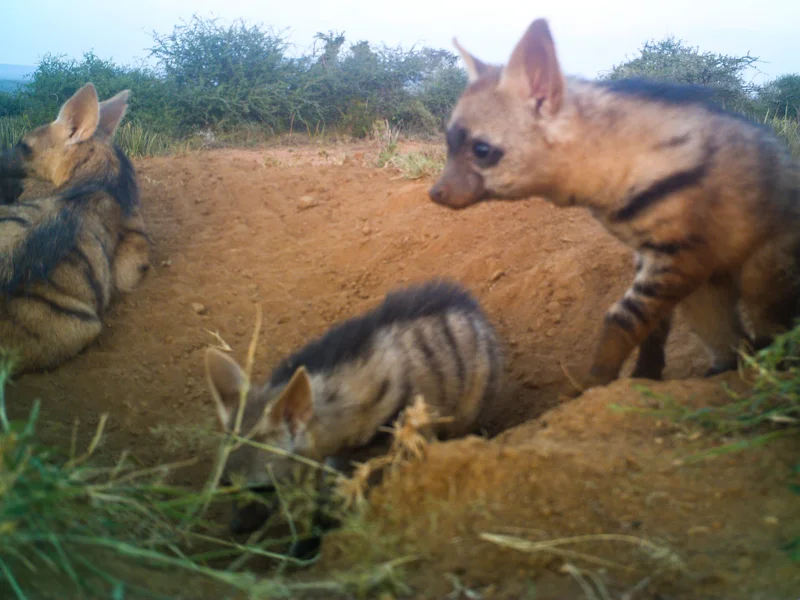
Ecology and behavior
The aardwolf is the smallest and most specialized hyena, feeding almost exclusively on termites.
- Insectivorous; does not scavenge large carcasses
- Mostly nocturnal and solitary
- Highly sensitive to disturbance
- Uses old aardvark or warthog burrows for shelter
Despite its cryptic nature, the aardwolf plays an important role in controlling termite populations.
Where to see aardwolves in Kenya
- Masai Mara National Reserve – Rare but present; best seen at night
- Laikipia Plateau – One of the best regions for sightings
- Tsavo East National Park – Occasional records in open savanna
5. Hyenas in Kenya’s Ecosystems (Why They Matter)
Hyenas provide critical ecosystem services:
- Carcass removal, reducing disease transmission
- Regulation of prey populations (especially by spotted hyenas)
- Influencing behavior and distribution of other predators
In many Kenyan ecosystems, hyenas are more important to ecosystem stability than lions, despite receiving far less public admiration.
6. Threats and Conservation Challenges

Major threats to hyenas in Kenya include:
- Poisoning, often linked to livestock conflict or predator control
- Negative cultural perceptions, especially outside protected areas
- Habitat fragmentation and road mortality
- Decline in natural prey and scavenging opportunities
Spotted hyenas remain relatively secure, but striped hyenas are declining, and aardwolves are poorly monitored.
7. Best Time and Tips for Seeing Hyenas in Kenya
- Early morning and late evening offer the best daylight sightings
- Night drives dramatically increase chances of seeing striped hyenas and aardwolves
- Watch for vocalizations—whoops and cackles often reveal hyena presence before visual contact
Hyenas are among the most rewarding animals for patient observers due to their complex social behavior.
8. Hyenas in Kenya: Reframing the Narrative
Hyenas in Kenya are not villains of the savanna. They are:
- Among Africa’s most intelligent mammals
- Essential to ecosystem health
- A powerful example of how misunderstood species can still be conservation successes
Understanding hyenas is key to understanding how Kenyan ecosystems truly function.