A clear, expert field guide for Kenyan safaris
On a Kenyan safari, cheetahs and leopards are often confused—especially at a distance or in poor light. Yet Cheetah and Leopard are fundamentally different cats, adapted to opposite hunting strategies, habitats, and lifestyles.
This expert guide shows you exactly how to tell cheetahs and leopards apart, using visible traits, behavior, and habitat cues that work in real safari conditions.
1. Spot Pattern: The Fastest Visual Clue
Cheetah
- Solid black spots
- Evenly spaced, round dots
- No clusters or rings
Leopard
- Rosettes (ring-shaped markings)
- Dark outline with lighter center
- Irregular spacing
Rule of thumb:
Dots = cheetah. Rosettes = leopard.
If you can clearly see rosettes, it is never a cheetah.
2. Face Markings: Tear Lines vs Clean Cheeks


Cheetah
- Distinct black “tear lines”
- Run from the inner eye down to the mouth
- Reduce glare during daytime hunting
Leopard
- No tear lines
- Face is broader, more uniformly spotted
This is one of the most reliable identification features, even in binoculars.
3. Body Shape and Posture
| Feature | Cheetah | Leopard |
|---|---|---|
| Build | Slim, lightweight | Stocky, muscular |
| Chest | Narrow | Broad |
| Legs | Long and thin | Shorter, powerful |
| Tail | Long, thick, often flat-ended | Thicker base, tapers |
| Overall look | “Greyhound-like” | “Bodybuilder-like” |
Cheetahs look built for speed.
Leopards look built for strength.
4. Head Size and Expression
Cheetah
- Small, rounded head
- Delicate muzzle
- High-set eyes
Leopard
- Large, broad skull
- Powerful jaws
- Heavy, intimidating facial structure
If the cat looks big-headed and solid, it is almost certainly a leopard.
5. Claws and Movement (Advanced Clue)
Cheetah
- Semi-retractable claws
- Often visible when walking
- Designed for traction
Leopard
- Fully retractable claws
- Usually invisible
- Designed for climbing and killing
In practice, this is subtle—but visible in clear photos or close sightings.
6. Habitat Use: Where You See Them Matters
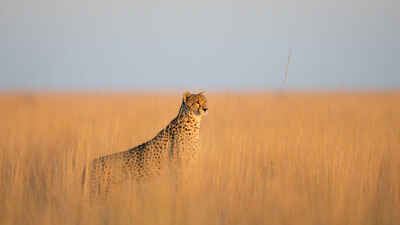
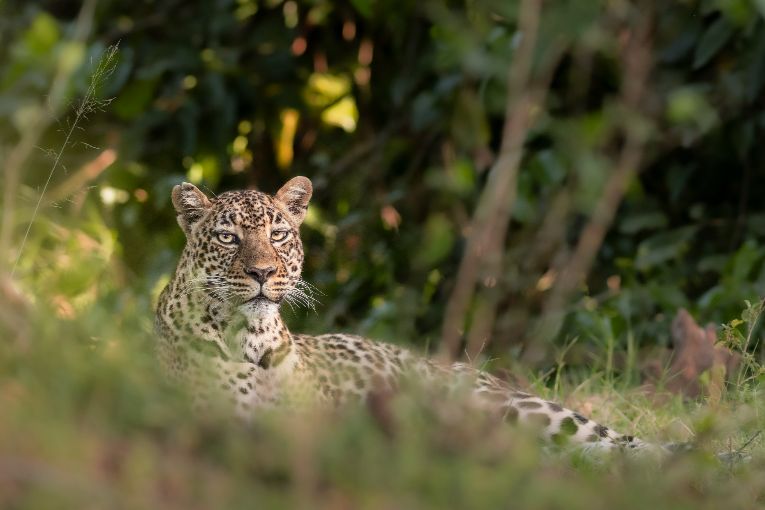
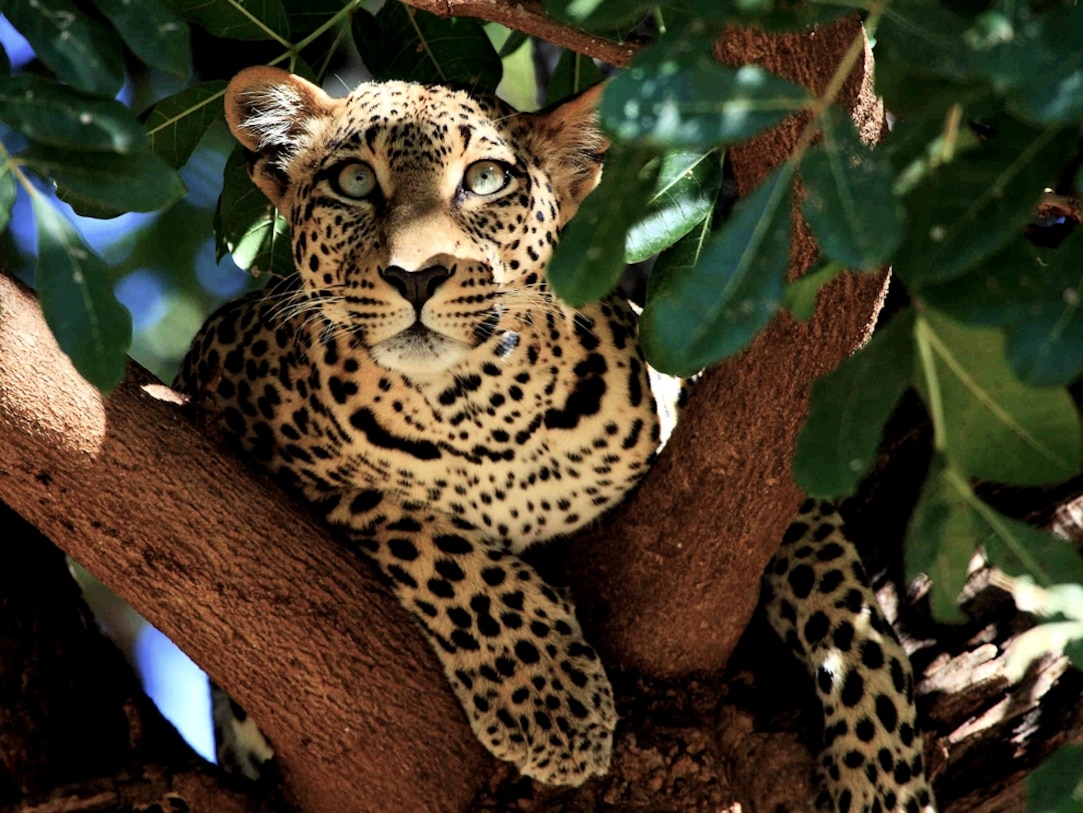
4
Cheetahs prefer:
- Open plains
- Short grass savannas
- Flat, visible landscapes
Common in:
- Masai Mara National Reserve (open plains)
- Amboseli National Park
- Laikipia Plateau
Leopards prefer:
- Riverine forests
- Thickets and rocky kopjes
- Areas with trees for ambush and storage
Common in:
- Masai Mara National Reserve (riverlines)
- Tsavo National Parks
- Samburu National Reserve
Open plains = cheetah likely
Trees and thick cover = leopard likely
7. Behavior: What the Cat Is Doing
| Behavior | Cheetah | Leopard |
|---|---|---|
| Time active | Daytime (diurnal) | Night & dusk (nocturnal) |
| Hunting style | High-speed chase | Silent ambush |
| Kill handling | Eats quickly on ground | Drags prey into trees |
| Sociality | Females solitary; males in coalitions | Strictly solitary |
If you see a cat feeding in a tree, it is a leopard.
Cheetahs cannot lift large prey into trees.
8. Cub and Family Clues
Cheetah cubs
- Fluffy grey mantle along the back
- Often hidden in tall grass
- Mothers constantly moving them
Leopard cubs
- No mantle
- Usually hidden in dense cover or rocks
- Mother returns periodically
The cheetah cub mantle is unique and unmistakable.
9. Size Comparison (Adults)
| Species | Average weight |
|---|---|
| Cheetah | 35–54 kg |
| Leopard | 45–90+ kg |
Despite appearances, leopards are heavier and stronger, even when they look smaller.
10. Conservation Status in Kenya
- Cheetah: Vulnerable; declining due to habitat loss and predator pressure
- Leopard: Vulnerable; adaptable but persecuted outside protected areas
Seeing either species in Kenya is a privilege—but cheetahs are far more ecologically fragile.
11. Quick Safari ID Checklist
If you only remember three things, remember these:
- Tear lines = cheetah
- Rosettes + trees = leopard
- Slim sprinter vs muscular ambusher
The Expert Takeaway
Cheetahs and leopards may share spots, but they represent opposite evolutionary solutions:
- Cheetahs survive through speed and visibility
- Leopards survive through strength and secrecy
Learning to tell them apart deepens not just safari enjoyment, but understanding of how Kenya’s predators coexist.