A comprehensive, ecology-driven guide to cheetahs in Kenya, covering biology, behavior, distribution, conservation, and where to see them
Kenya is one of the most important remaining strongholds for the Cheetah, Africa’s fastest land mammal and one of its most specialized predators. Although cheetahs are iconic safari animals, they are also among the most vulnerable large carnivores, facing unique ecological and conservation challenges that differ sharply from those of lions and hyenas.
1. Taxonomy and Conservation Status
- Scientific name: Acinonyx jubatus
- Family: Felidae
- IUCN Red List status: Vulnerable (VU)
Cheetahs are genetically distinct from other big cats and exhibit exceptionally low genetic diversity, a legacy of ancient population bottlenecks. This lack of diversity contributes to:
- Higher cub mortality
- Sensitivity to environmental change
- Lower resilience to habitat fragmentation
Kenya’s cheetah population is therefore globally significant despite appearing locally common in a few prime areas.
2. Physical Adaptations: Built for Speed, Not Combat
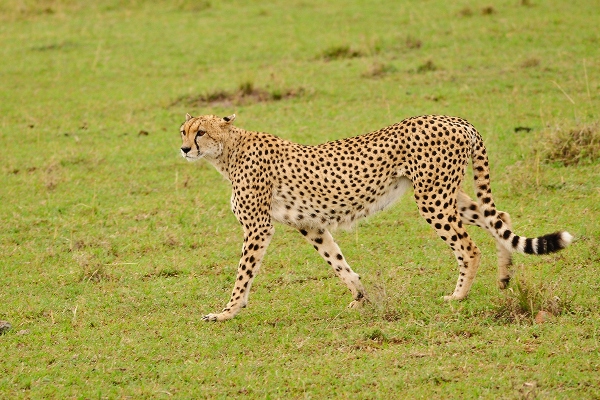
Cheetahs are the most cursorial of all cats, evolved for short bursts of extreme speed rather than strength.
Key adaptations
- Flexible spine acting like a spring
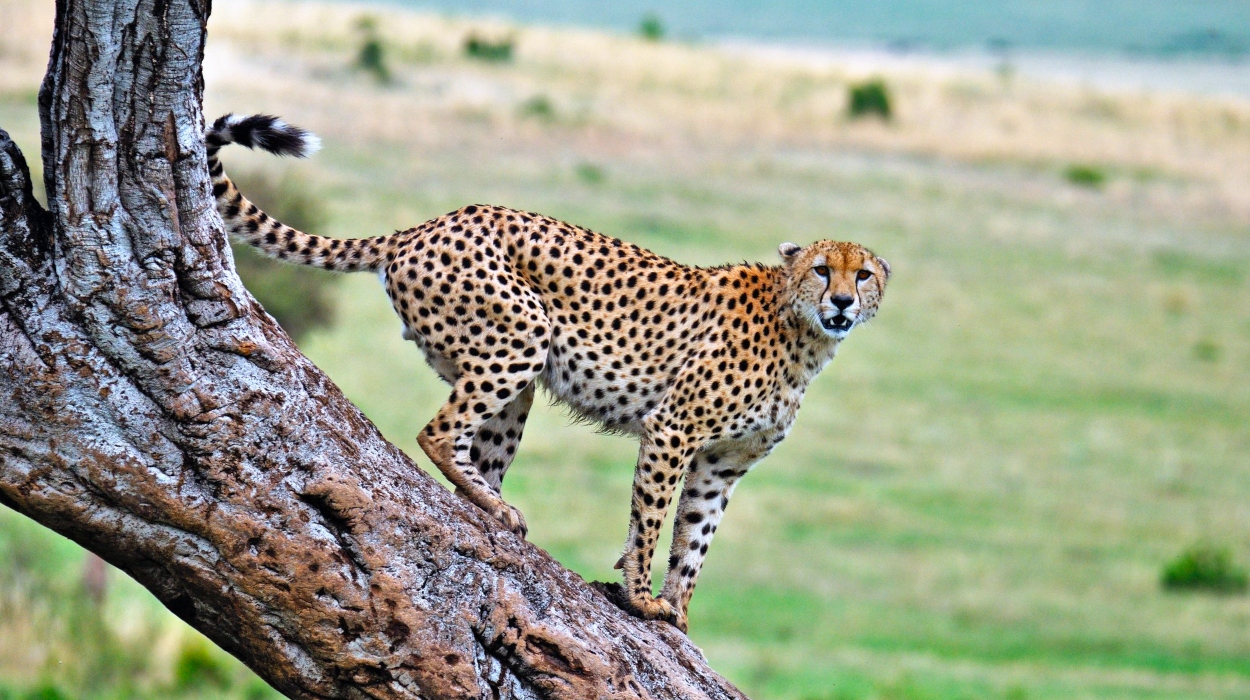
- Long legs and lightweight frame
- Semi-retractable claws for traction
- Enlarged nasal passages and lungs
- Rudder-like tail for balance at high speed
These traits allow cheetahs to reach 90–100 km/h, but come at a cost: cheetahs are poor fighters and easily displaced from kills by lions and hyenas.
3. Where Cheetahs Live in Kenya (Geographic Distribution)

5
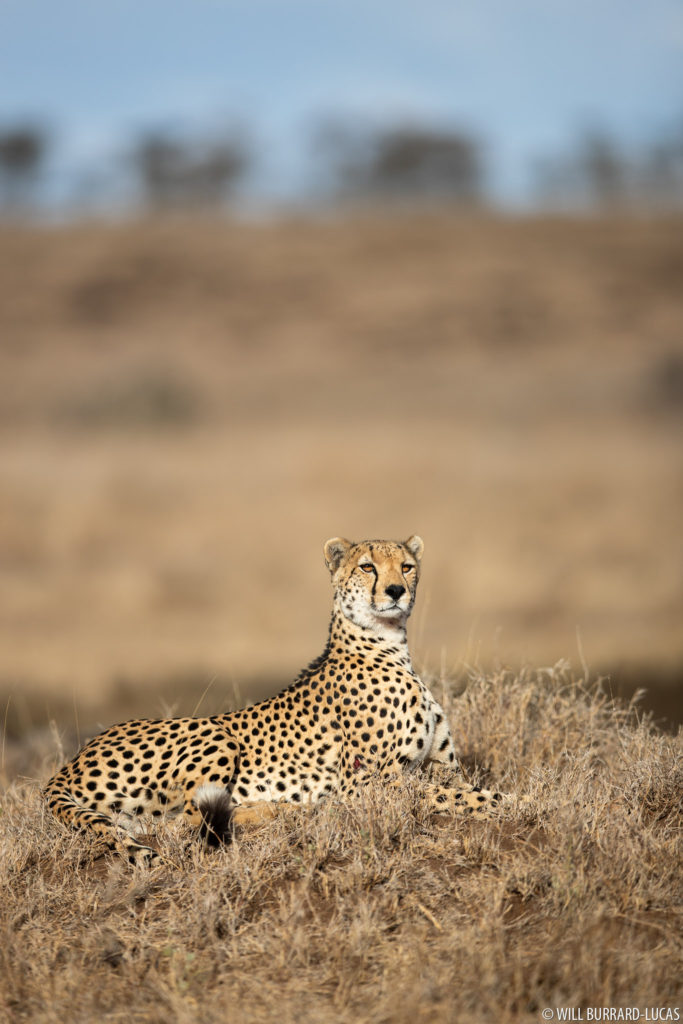
Cheetahs require open habitats with good visibility, making them highly sensitive to vegetation change.
Core cheetah landscapes in Kenya
- Masai Mara National Reserve – Kenya’s most reliable cheetah viewing; part of the wider Serengeti–Mara population
- Amboseli National Park – Low-density but spectacular open-plain hunting
- Laikipia Plateau – One of Kenya’s most important long-term cheetah strongholds
- Samburu National Reserve – Sparse but resilient arid-adapted populations
- Tsavo East National Park – Low visibility, wide-ranging individuals
Many Kenyan cheetahs spend more time outside national parks than inside them, relying on private and community conservancies.
4. Social Structure and Behavior
Females: solitary specialists
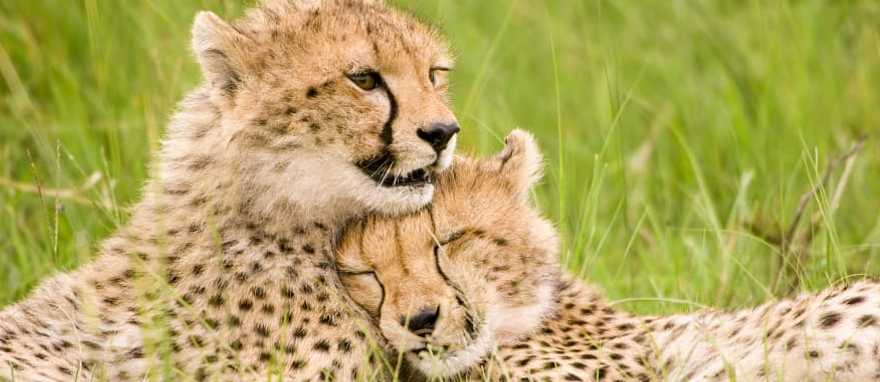
- Adult females live alone with dependent cubs
- Raise cubs without male assistance
- Extremely secretive when cubs are young
Males: coalitions
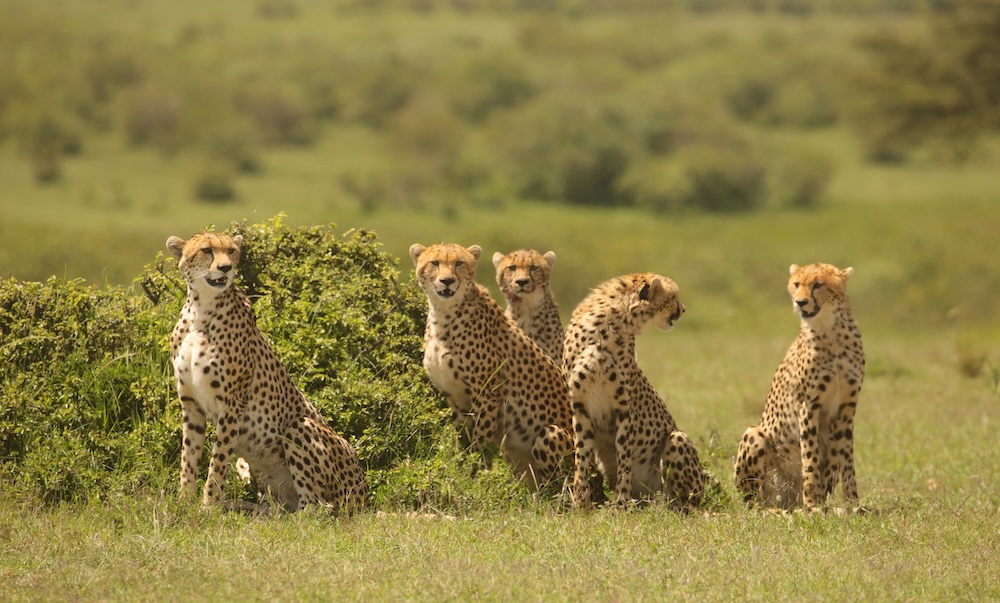
- Males often form coalitions of brothers (2–3 individuals)
- Coalitions defend territories and increase mating success
- Coalition males are more visible and longer-lived
This unusual social system is a key factor in cheetah ecology and population dynamics.
5. Hunting Strategy and Diet
Cheetahs are diurnal hunters, relying on vision rather than ambush cover.
Typical prey in Kenya
- Thomson’s gazelle
- Impala
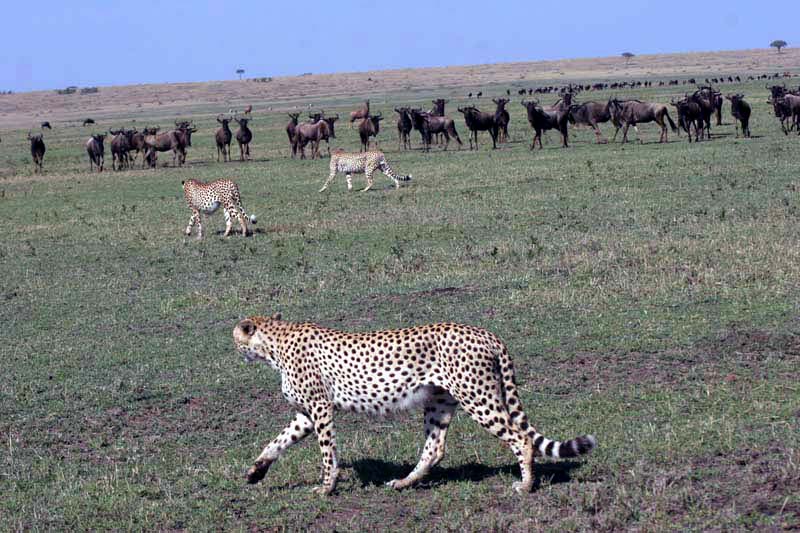
- Young wildebeest
- Small antelope species
The hunt sequence
- Stalk to within 50–100 m
- Explosive sprint lasting <30 seconds
- Trip prey with foreleg
- Suffocation bite to the throat
Even after a successful kill, cheetahs lose 30–50% of kills to hyenas or lions.
6. Cheetahs and Other Predators: Suppression, Not Competition

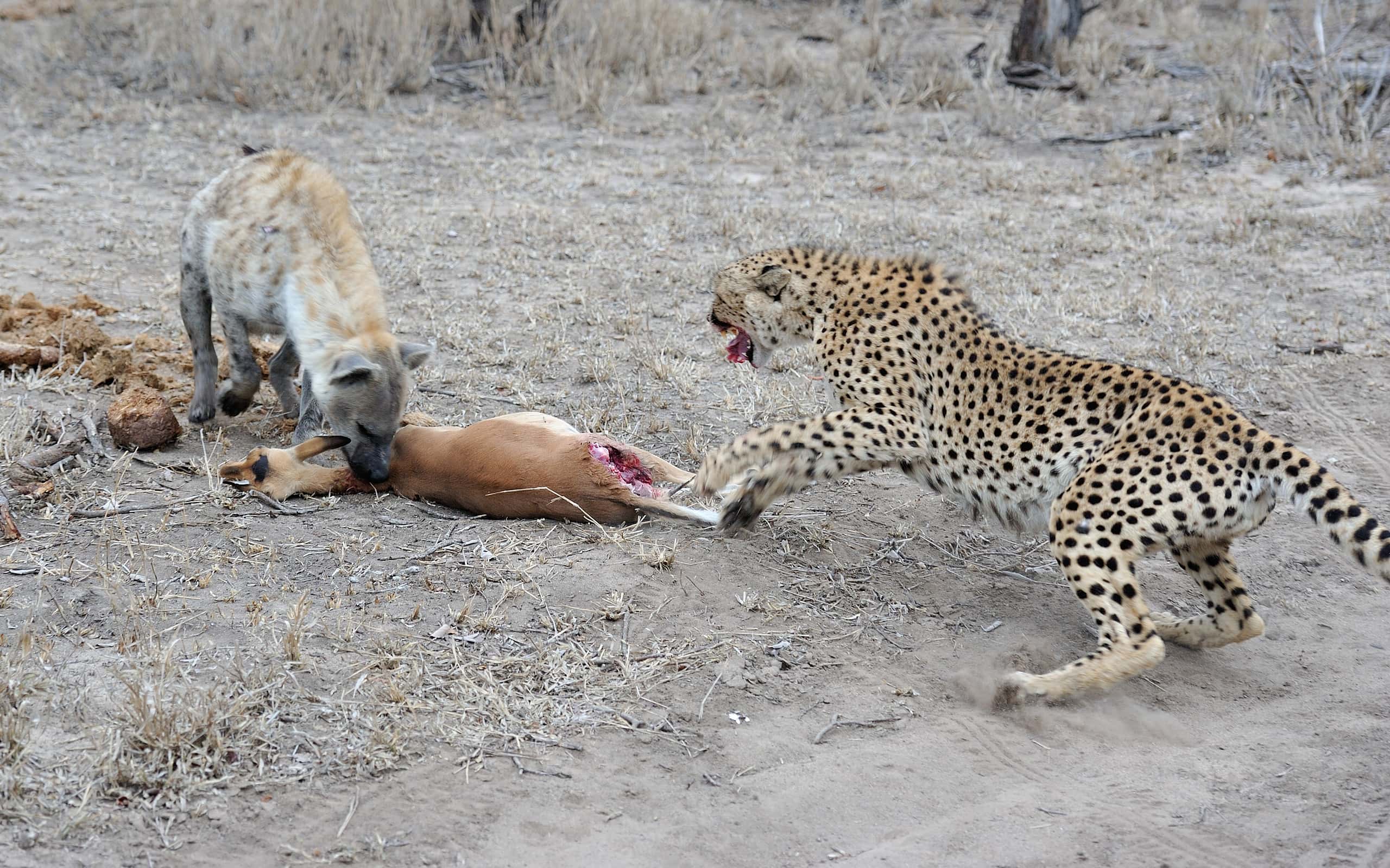

Cheetahs coexist poorly with larger predators.
- Lions and spotted hyenas kill cheetah cubs
- High predator density = low cub survival
- Adult cheetahs avoid areas with heavy lion use
This means cheetah numbers are often lowest in the richest ecosystems, a paradox critical to understanding their conservation.
7. Reproduction and Cub Survival
- Litter size: 2–6 cubs
- Cub mortality can exceed 70% in high-predator areas
- Females use tall grass and movement to hide cubs
In the Masai Mara, high lion and hyena densities suppress recruitment, while areas like Laikipia often show higher cub survival.
8. Threats to Cheetahs in Kenya

Primary threats
- Habitat loss and fragmentation
- Livestock conflict and retaliatory killing
- Road mortality
- Illegal wildlife trade (especially cubs)
- Predator suppression by lions and hyenas
Unlike lions, cheetahs are poorly suited to fenced or fragmented landscapes.
9. Cheetah Conservation in Kenya
Kenya is a leader in cheetah research and conservation, including:
- Long-term photographic identification
- Community conservancies that allow wide ranging
- Conflict mitigation with pastoralist communities
- Monitoring of cub survival and landscape connectivity
Successful cheetah conservation depends on large, unfenced, predator-tolerant landscapes.
10. Best Places to See Cheetahs in Kenya

Top cheetah viewing destinations
- Masai Mara: Highest sighting rates; famous individual lineages
- Laikipia conservancies: Excellent behavior viewing, fewer vehicles
- Amboseli: Dramatic hunts against Mount Kilimanjaro backdrops
- Samburu: Rare but rewarding arid-land sightings
Best time of day: mid-morning to late afternoon, when cheetahs hunt most actively.
11. Are Cheetahs Dangerous to Humans?
Cheetahs are not considered dangerous to humans:
- No documented cases of cheetahs preying on people
- Extremely shy and avoidance-oriented
- Most human interactions occur at a distance
They are the least aggressive of Africa’s large carnivores.
12. Why Cheetahs Matter in Kenya
Cheetahs are:
- Indicators of open, functional savannas
- A flagship species for landscape connectivity
- A warning sign of predator imbalance
Protecting cheetahs in Kenya means protecting space, visibility, and coexistence—qualities increasingly rare in modern landscapes.
13. The Expert Takeaway
Cheetahs in Kenya survive not through dominance, but through specialization. Their continued presence depends less on prey numbers and more on space, tolerance, and ecological balance.
They are fast—but fragile.
Visible—but vulnerable.
Iconic—but far from secure.