A definitive expert guide to population size, distribution, and what the numbers really mean
The question “how many cheetahs are in Kenya?” appears simple, but the expert answer requires understanding how cheetahs live, how they are counted, and why raw numbers can be misleading.
Kenya is one of Africa’s most important range states for the Cheetah, yet cheetahs are naturally rare, highly mobile, and unevenly distributed. This guide explains the best current population estimates, where cheetahs occur, and how conservationists interpret those figures.
1. The Best Current Estimate: Kenya’s Cheetah Population
Estimated number of cheetahs in Kenya
≈ 1,000 – 1,500 individuals
Most experts place Kenya’s cheetah population around the low thousands, making it one of the top three cheetah range countries in Africa.
However, this figure:
- Is an estimate, not a census
- Includes adults, subadults, and cubs
- Fluctuates with prey availability, rainfall, and land use
There is no single national count, because cheetahs do not occur at uniform densities and cannot be surveyed like elephants or buffalo.
2. Why Counting Cheetahs Is Difficult
Cheetahs are among the hardest large carnivores to count accurately.
Key challenges
- Very large home ranges, especially for females
- Low densities, even in prime habitat
- High cub mortality, causing rapid turnover
- Frequent movement outside protected areas
As a result, population estimates are derived from:
- Long-term photographic identification
- Landscape-level density modeling
- Collared individuals extrapolated across suitable habitat
Numbers should always be read as ranges, not absolutes.
3. Where Kenya’s Cheetahs Are Found (Distribution by Landscape)
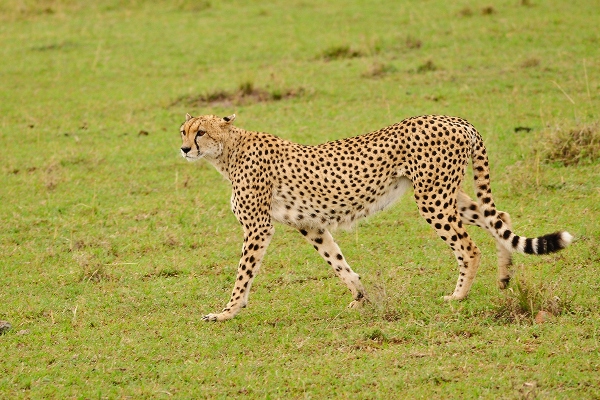
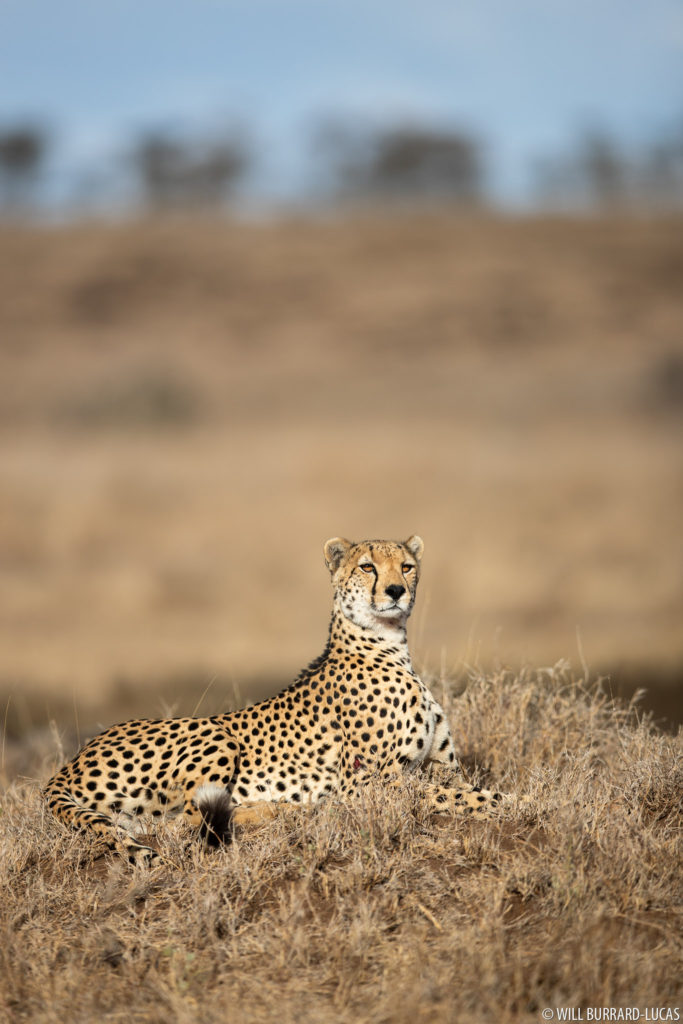
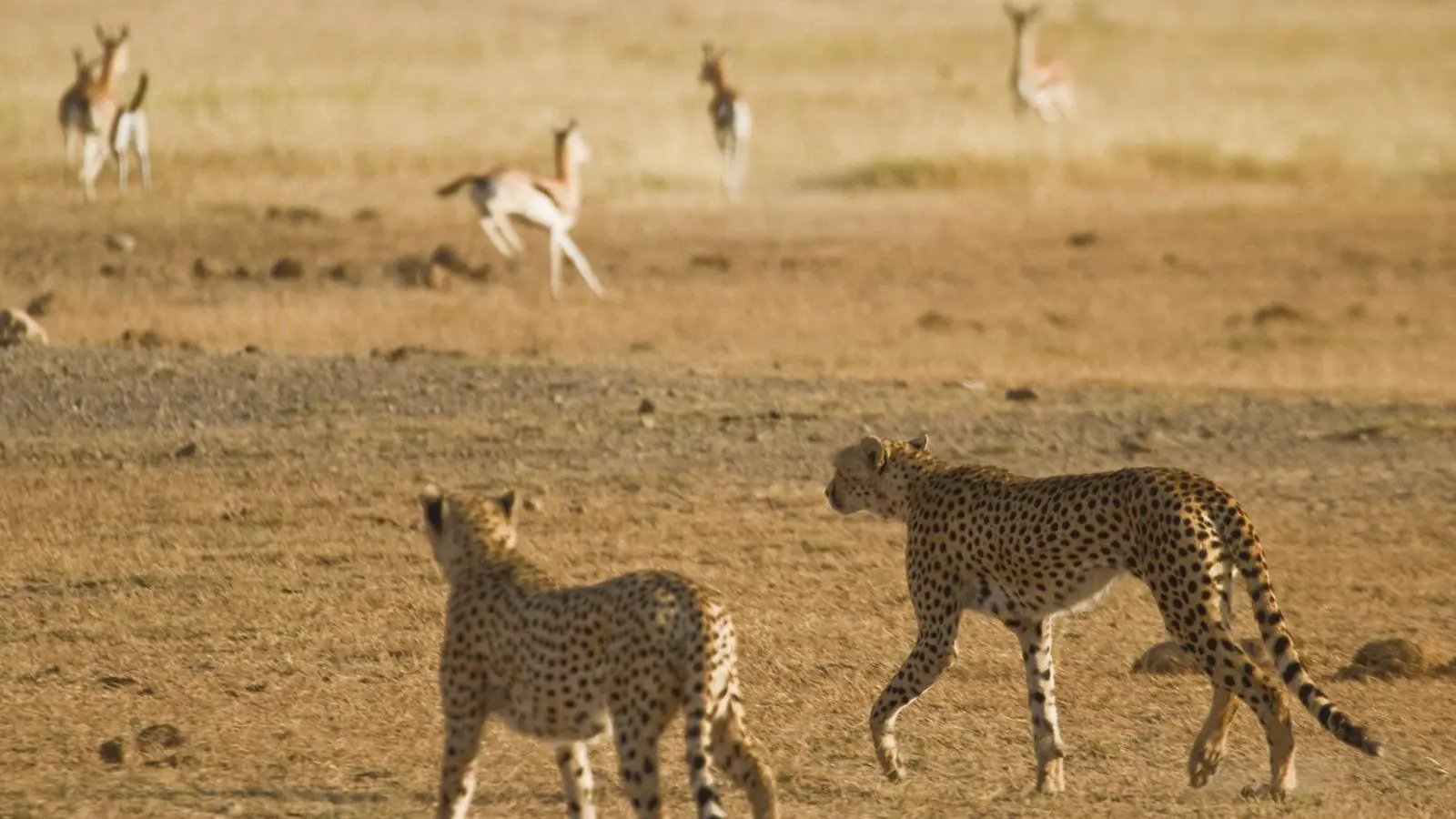
5
Key cheetah landscapes in Kenya
Masai Mara National Reserve
- Most visible cheetah population
- Part of the wider Serengeti–Mara system
- High adult sightings, lower cub survival
Laikipia Plateau
- One of Kenya’s most important cheetah strongholds
- Large, connected conservancies
- Higher recruitment and survival rates
Amboseli National Park
- Small population
- Excellent visibility due to open plains
- High dependence on surrounding community lands
Samburu National Reserve
- Low-density, arid-adapted cheetahs
- Large ranging individuals
Tsavo East National Park
- Extensive habitat
- Very low visibility; wide-ranging individuals
Crucially:
An estimated 60–70% of Kenya’s cheetahs spend most of their time outside national parks, on private or community land.
4. Cheetahs vs Lions: Why Numbers Can Be Misleading
Cheetahs are often compared to lions, but this comparison obscures reality.
| Species | Approx. population in Kenya |
|---|---|
| Lions | ~2,000–2,500 |
| Cheetahs | ~1,000–1,500 |
Despite being half as numerous, cheetahs require more space per individual and are far more vulnerable to habitat fragmentation.
A park that supports lions does not automatically support cheetahs.
5. Population Trend: Are Cheetahs Increasing or Declining?
The expert consensus
- Stable to declining nationally
- Increasing in some conservancy landscapes
- Declining or absent in fragmented regions
Kenya’s cheetah population is best described as unevenly resilient:
- Where land remains open and connected, cheetahs persist
- Where fencing, farming, and roads expand, cheetahs disappear
6. How Many Breeding Female Cheetahs Are There?
This is the most important number, and the hardest to estimate.
- Likely fewer than 300–400 adult breeding females nationwide
- Female survival and cub recruitment determine population viability
- Loss of just a few key females can collapse local populations
This is why conservationists focus less on sightings and more on female home ranges and cub survival.
7. Kenya’s Importance in Global Cheetah Conservation
Globally, cheetahs have lost over 90% of their historic range.
Kenya now plays a critical role because it still has:
- Large, unfenced landscapes
- Community conservancies
- Coexistence-based conservation models
Without Kenya, global cheetah numbers would drop significantly.
8. What These Numbers Mean for Safari Visitors
High cheetah visibility in places like the Masai Mara can create a false sense of security.
Important distinctions:
- Seeing cheetahs ≠ a secure population
- Frequent sightings often reflect a few well-known individuals
- Long-term survival depends on unseen landscapes beyond parks
Cheetahs are locally visible but globally vulnerable.
9. The Expert Takeaway
So—how many cheetahs are in Kenya?
- Roughly 1,000–1,500 individuals nationwide
- Fewer than 400 breeding females
- Most live outside protected areas
- Their future depends on space, connectivity, and tolerance
Cheetahs are not disappearing because Kenya lacks wildlife.
They are disappearing because space is disappearing.